
Filler: Yield and Texture Solutions for Poultry Processing
Poultry’s naturally weaker protein matrix requires a different yield and texture strategy than red meat. See how Rockets’ Filler technologies are engineered specifically for chicken processing.
 Chicken
 Chicken processing
The Protein Weakness That Makes Chicken Formulation Harder Than Beef
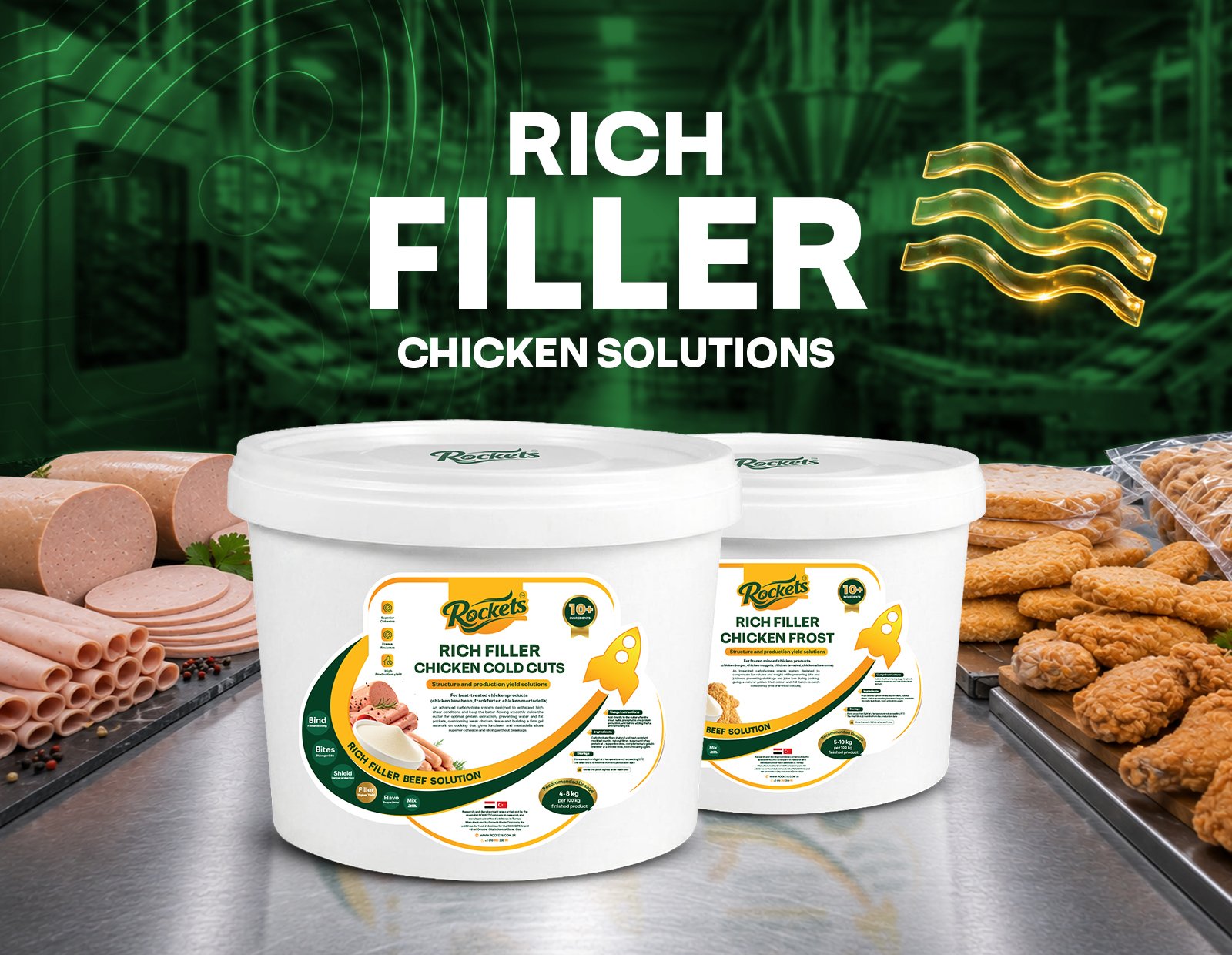
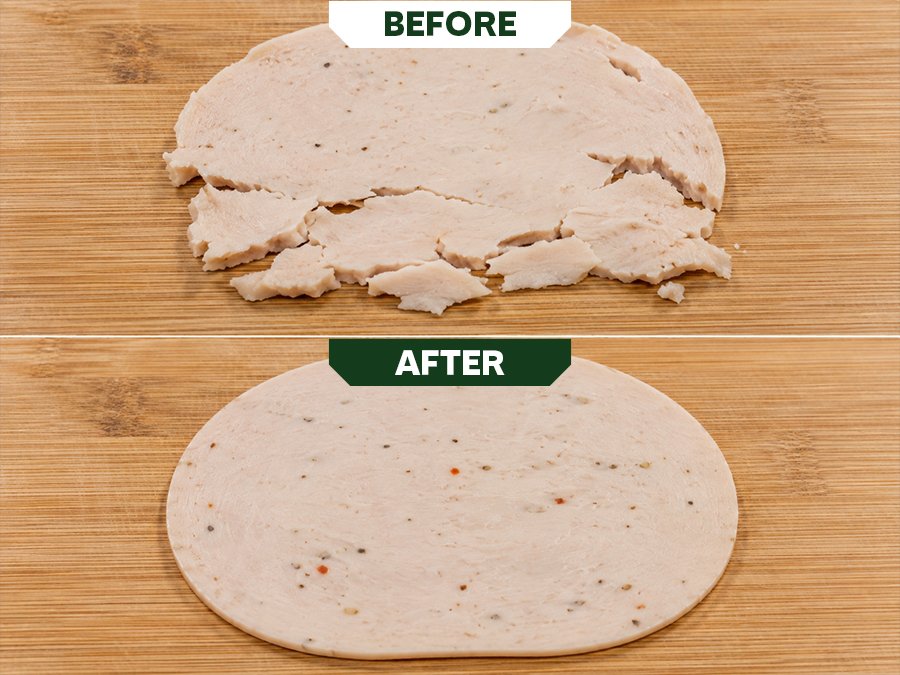
Ask any formulator who has worked with both species, and they will tell you the same thing: chicken is structurally harder to bind than beef. The myofibrillar protein network in poultry muscle is inherently weaker than in red meat, which means poultry products are more prone to water and fat separation, more likely to develop a mushy or falling-apart texture after slicing, and more vulnerable to shrinkage during freezing and reheating. A phosphate or filler system that performs adequately in beef will frequently underperform in chicken, simply because it isn’t compensating for this baseline structural weakness. This is why Rockets maintains a poultry-specific Filler line rather than a single cross-species formulation.
Phospho Bind Chicken: Engineered for a Weaker Starting Protein Matrix
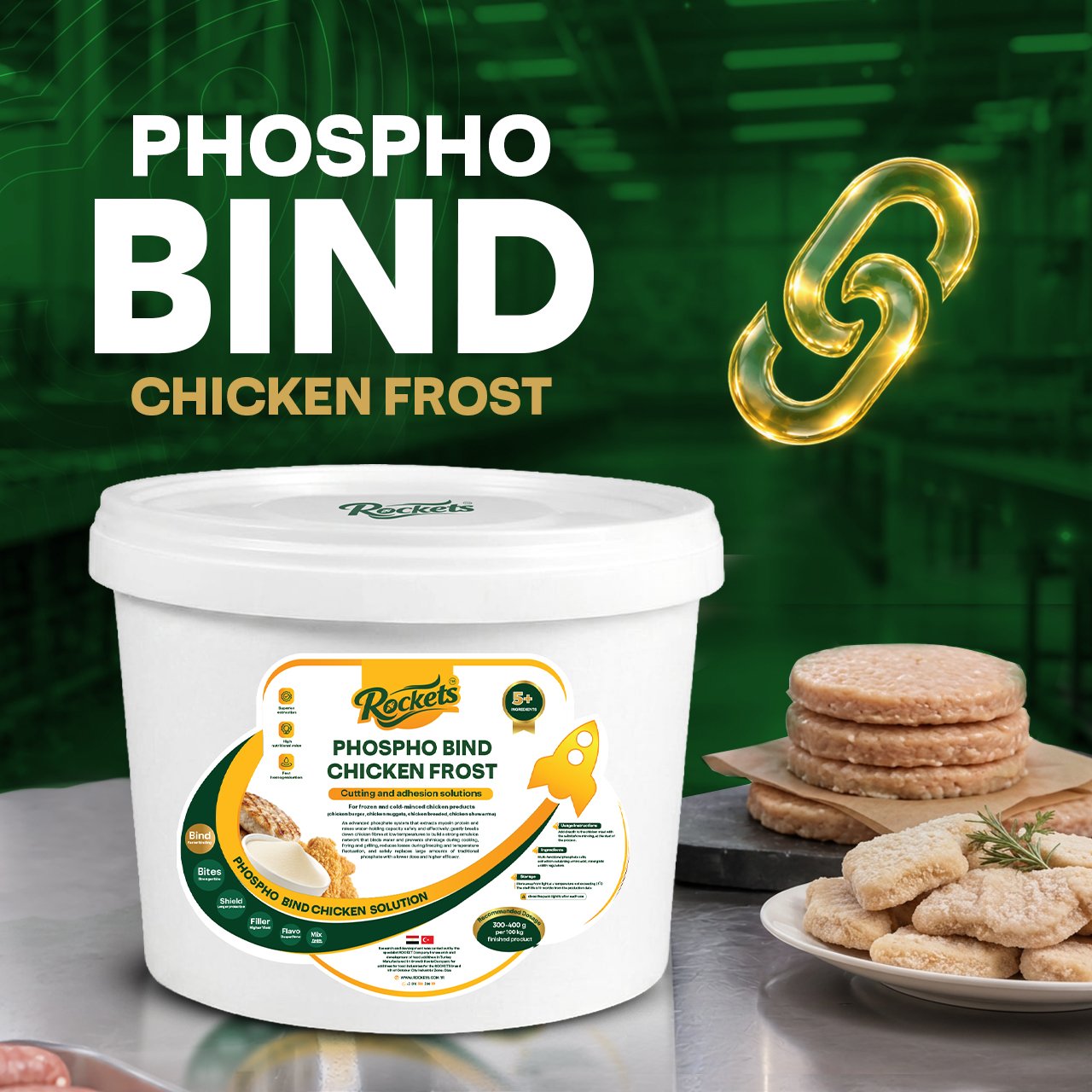
Phospho Bind Chicken (Cold Cuts, Frost, and Flow variants) uses the same core phosphate-extraction science as the beef version — rapid myosin extraction and water-binding capacity — but is calibrated to work with poultry’s naturally lower baseline protein strength. The Cold Cuts variant builds a gel network specifically strong enough to withstand the extended cook times inside luncheon and frankfurter ovens despite starting from weaker raw material, delivering clean slice-ability without the crumbling that under-bound chicken cold cuts are prone to. The Flow variant, designed for injection and marination applications across chicken breast, wings, and whole birds, is formulated for immediate, complete dissolution in ice-cold injection brine and long-term solution stability — a critical requirement given how frequently poultry processing lines run continuous injection equipment without downtime for re-mixing brine.
Rich Filler Chicken: Structural Support That Compensates for Weak Poultry Tissue
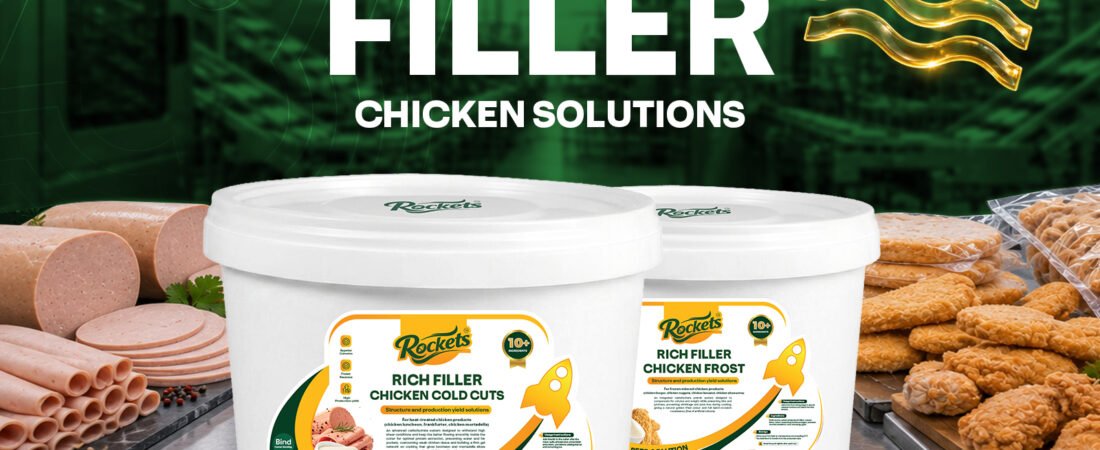
Rich Filler Chicken is a carbohydrate-based structural premix reformulated specifically to address poultry’s weak tissue structure — the same underlying issue Phospho Bind Chicken targets from the protein-extraction side, but approached from the bulk-and-texture side instead. The Cold Cuts variant is engineered to solve poultry’s characteristic weak-tissue problem while building a solid gelatin network at cooking temperature, giving sliced chicken luncheon and mortadella the tear-resistant integrity that a straight phosphate treatment alone cannot achieve. The Frost variant targets frozen ground-poultry applications — chicken burgers, nuggets, kofta, shawarma — where it compensates for size and weight loss during freeze-thaw cycles, prevents shrinkage and moisture loss (“purge”) during cooking, and produces a natural golden fry color as a secondary functional benefit.
Why the Injection Step Deserves Special Attention in Poultry
Because so much of poultry processing (wings, whole birds, breast fillets, shawarma cuts) relies on injection and marination rather than bowl-cutting, the Flow variant of Phospho Bind Chicken plays an outsized role compared to its beef equivalent. Injection systems are unforgiving of any instability in the brine solution — even minor precipitation or incomplete dissolution can clog fine injector needles and halt a production line. This operational reality is a primary reason poultry-specific phosphate engineering, rather than a repurposed red-meat formulation, matters for processors running high-throughput injection equipment.
 Phospho Bind Chicken Frost
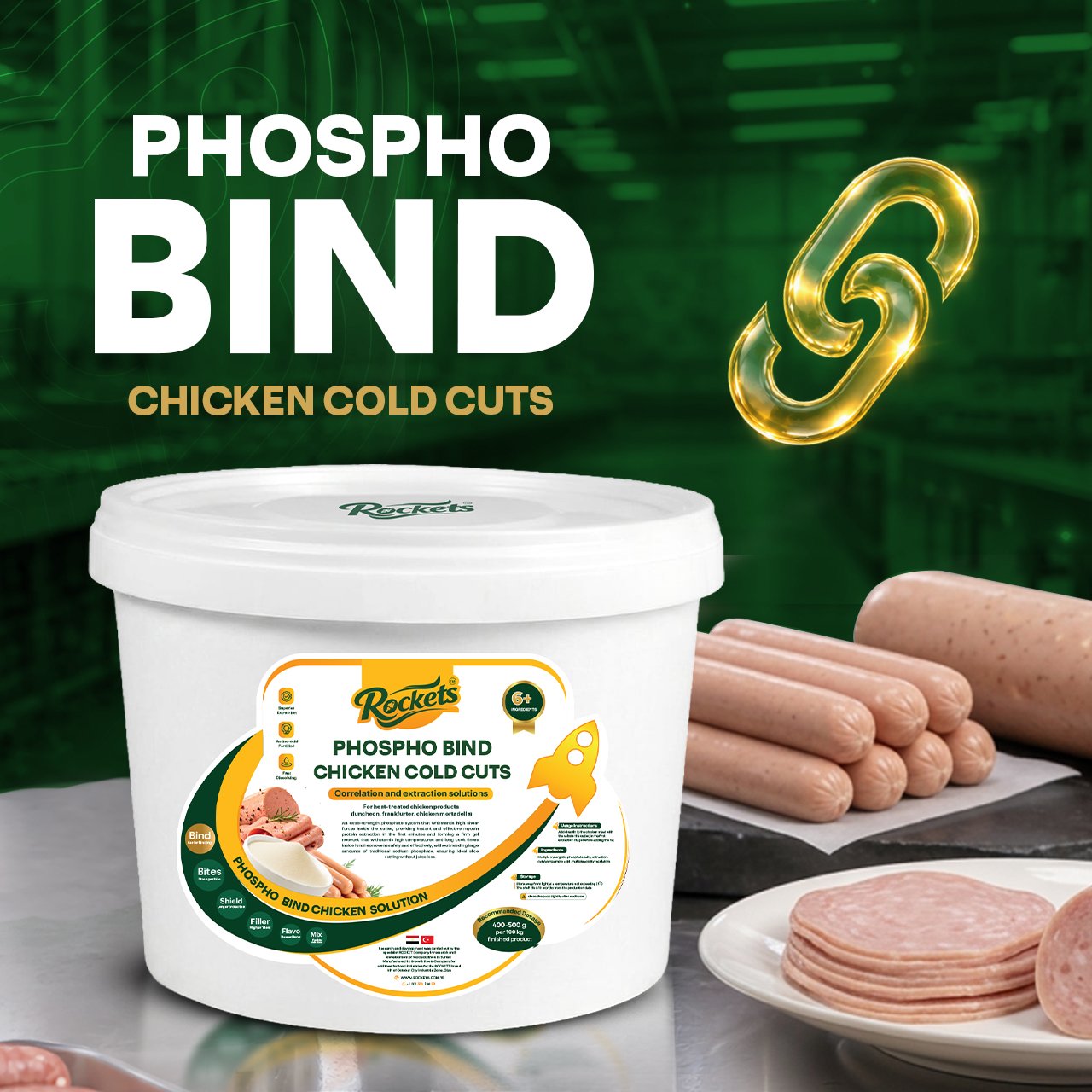 Phospho Bind Chicken Cold Cuts
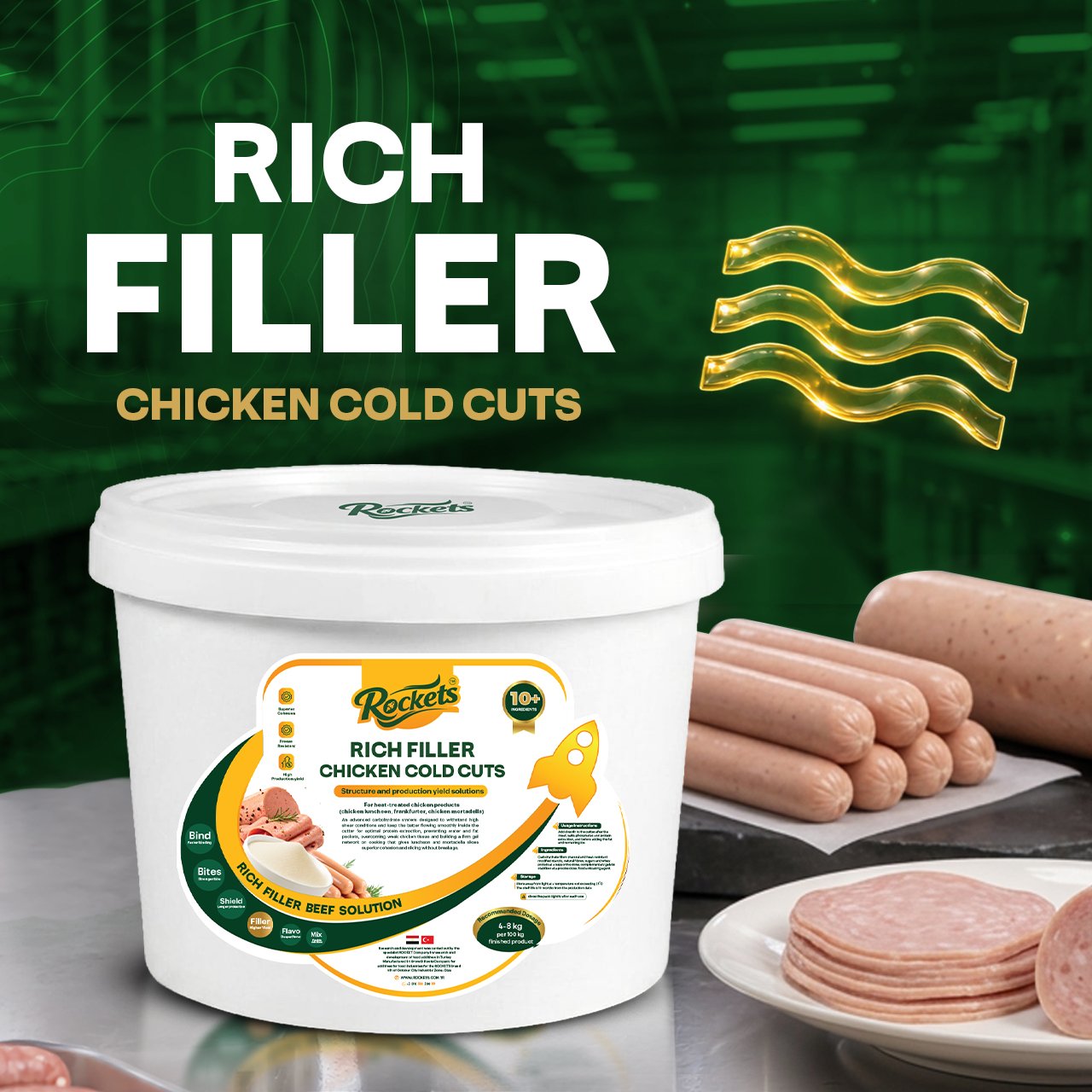 Rich Filler Chicken Cold Cuts
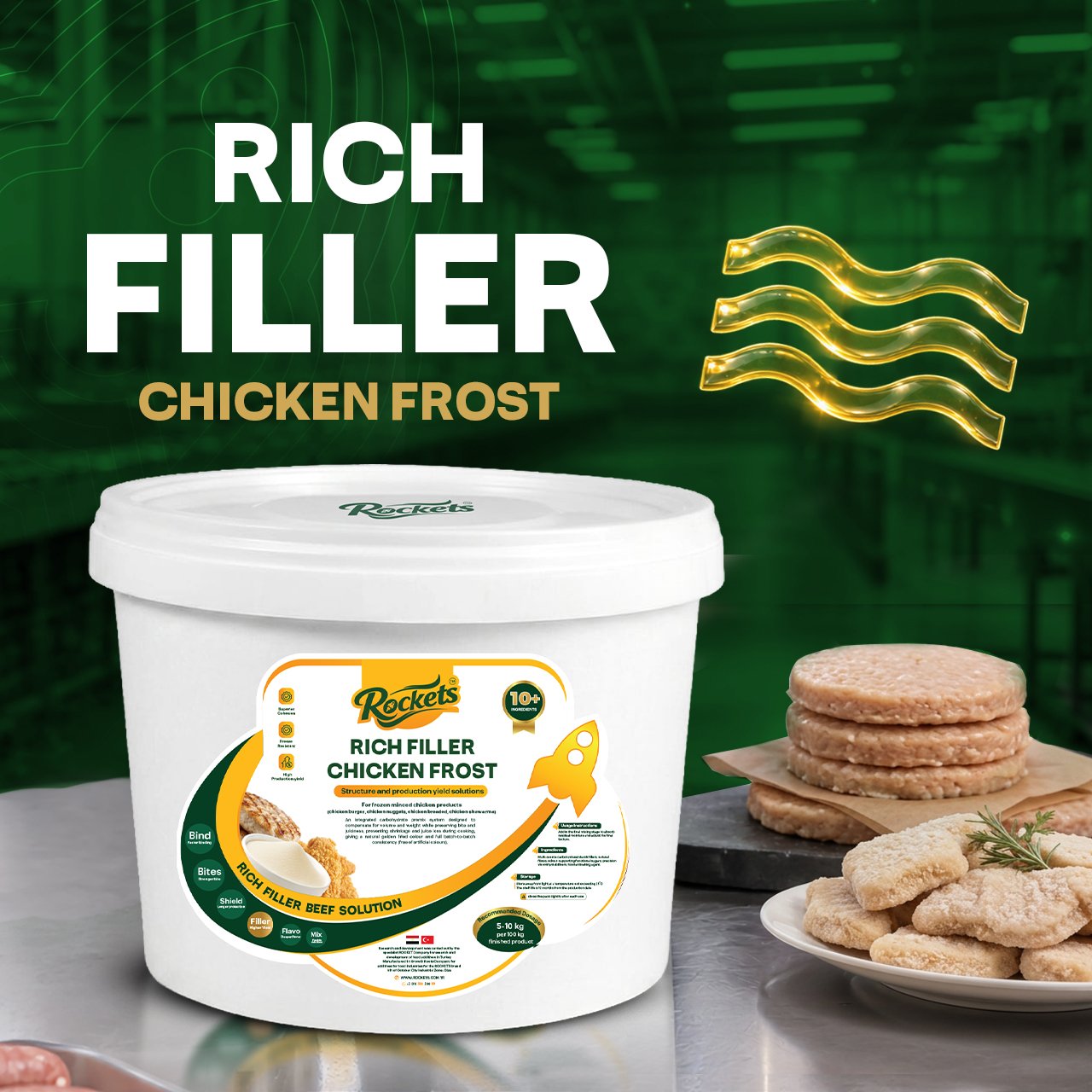 Rich Filler Chicken Frost
Solve Your Poultry Yield Challenge With Rockets
Whether your bottleneck is protein extraction, structural bulk, or injection-line reliability, Rockets’ poultry-specific Filler technologies are built around the biochemistry that actually governs chicken processing outcomes.