Shield: Protection Systems for Red Meat Processing
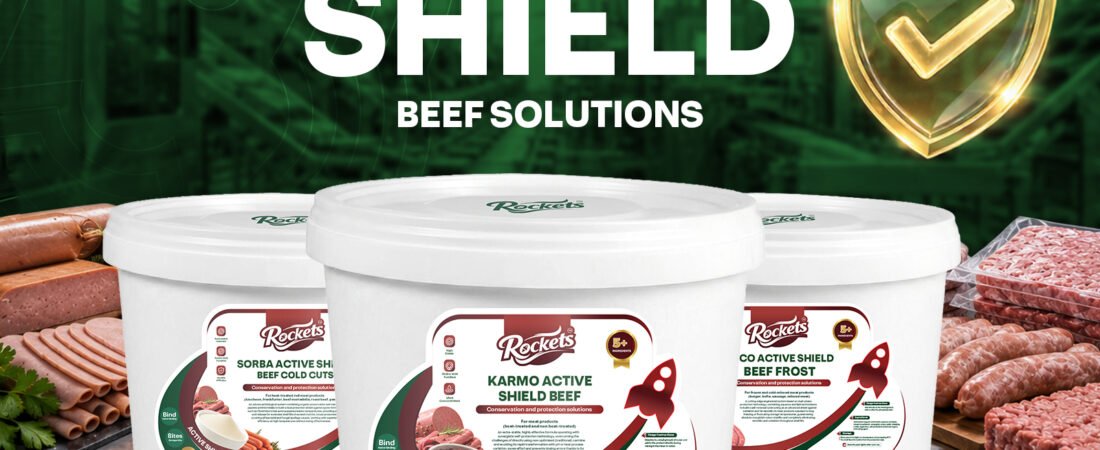
Discover how Rockets’ Shield family solves the four most costly failures in red meat processing: color fading, rancidity, microbial spoilage, and flavor inconsistency — with science-backed, natural additive systems.
 Beef
Beef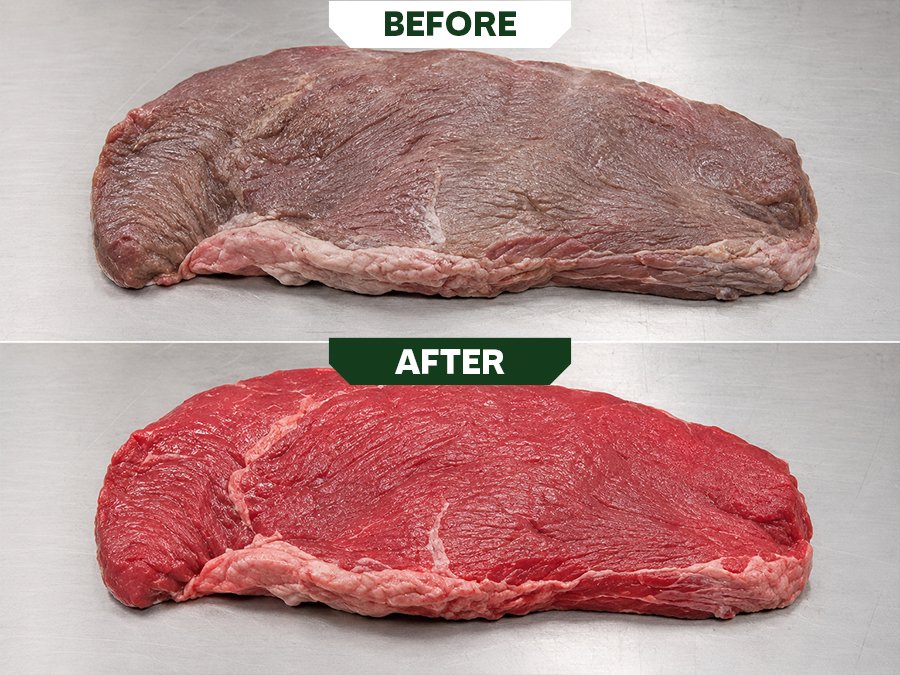 Before / After
Why Red Meat Processors Lose Money Before the Product Ever Leaves the Plant
Ask any production manager at a red meat processing facility what keeps them up at night, and four answers come up again and again: a batch of salami that oxidizes to a dull brown before it reaches the shelf, ground beef that develops a rancid off-note after eight weeks in frozen storage, a listeria contamination scare during slicing, or a monosodium glutamate–based flavor enhancer that customers are increasingly asking them to remove from the label. Each of these is a distinct technical failure, but they share a common root cause: the biochemistry of red meat — its myoglobin content, its polyunsaturated fat fraction, and its exposed protein surfaces after grinding — makes it inherently vulnerable to oxidation, microbial growth, and flavor drift. This is precisely the problem space that Rockets’ Shield family was engineered to solve. Shield is not a single ingredient; it is a functional category of four complementary systems, each targeting one specific failure mode in red meat: color stability, antioxidant protection, microbial preservation, and clean-label flavor enhancement. Understanding how each one works — and why it is formulated specifically for beef rather than poultry — is essential for any processor trying to extend shelf life without resorting to synthetic workarounds.
Karmo Active Shield Beef: Solving the Carmine Instability Problem
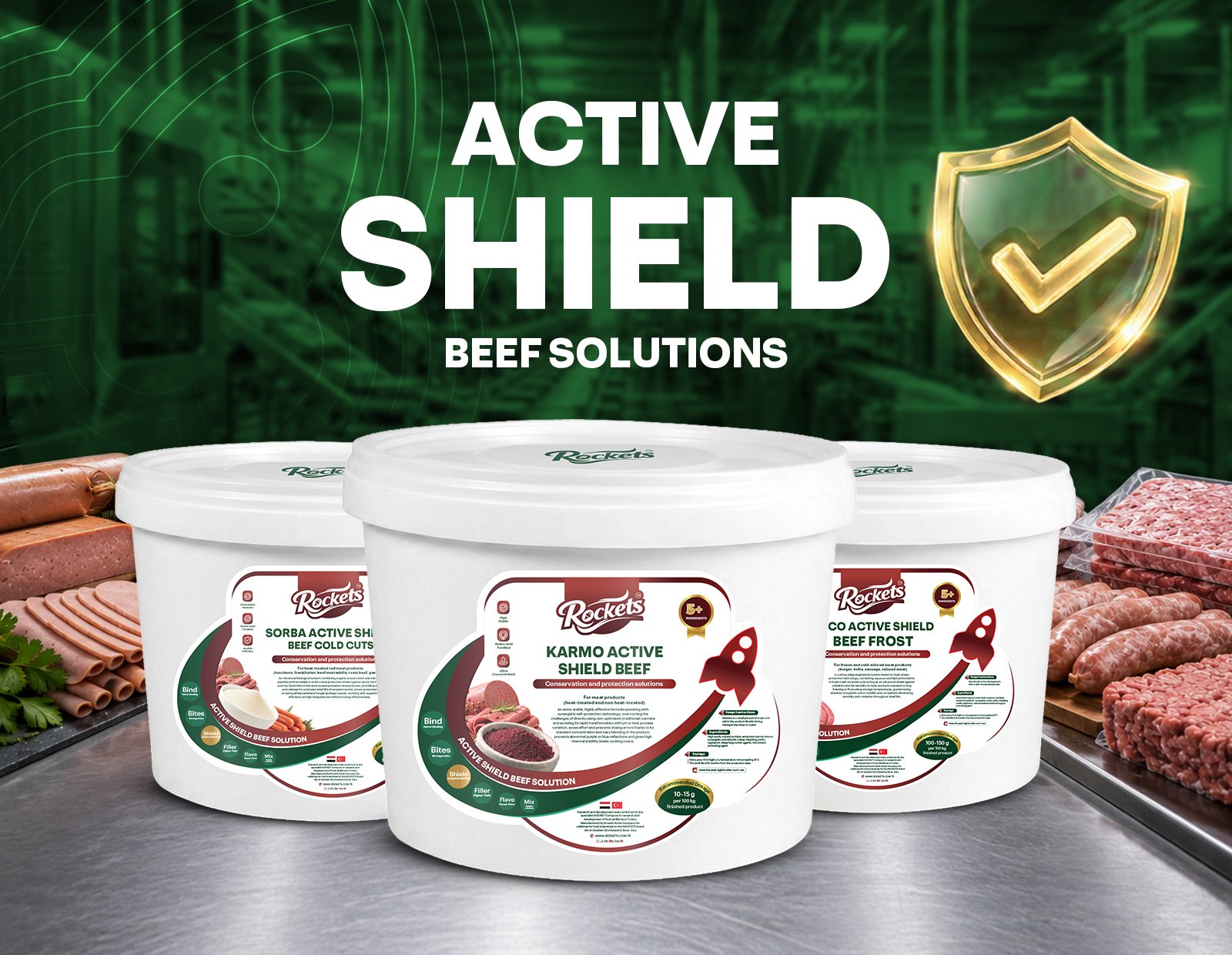
Natural carmine (cochineal extract) is the industry’s preferred red colorant for cured and processed meats, but unmodified carmine has a well-documented weakness: it shifts toward purple or blue undertones when exposed to pH fluctuation or heat processing, and it requires imprecise, error-prone dosing. Karmo Active Shield Beef addresses this directly through a self-protecting, synergistic stabilization technology that locks the pigment against these shifts. The formulation combines high-purity natural carmine with enhanced natural color co-factors, synergistic antioxidants, metal-chelating pH regulators, and a dispersing carrier system, allowing the color to remain stable through both thermally processed and non-thermally processed red meat products — from cooked sausage to fresh sausage — without the visual defects that plague standard carmine use.
Glumo Active Shield Beef: Umami Depth Without Synthetic MSG
The clean-label movement has put sustained pressure on processors to remove monosodium glutamate from ingredient declarations, but replacing it without sacrificing flavor depth is technically difficult — MSG’s glutamate ions are uniquely efficient at triggering umami receptors. Glumo Active Shield Beef solves this by combining natural dried beef extract with peptide-rich umami alternatives, engineered amino acids, and natural protein flavors that recreate and intensify the Maillard reaction pathway during cooking, grilling, and smoking. The result is a more consistent brown color and deeper meat flavor across every production batch, achieved through natural reaction chemistry rather than synthetic flavor potentiators.
Asco Active Shield Beef: Frost and Cold-Cut Protection Against Oxidation
Red meat’s polyunsaturated fat fraction is highly reactive, and both frozen storage and extended chilled storage accelerate lipid oxidation — the chemical process responsible for rancid, “cardboard” off-flavors. Asco Active Shield Beef (available in Frost and Cold Cuts variants) uses a dual-phase protection technology that combines water-soluble and fat-soluble antioxidants, mixed tocopherols, and amino-acid synergists to build a self-regenerating protective cycle within the product. This dual-phase approach matters because oxidation happens simultaneously in the aqueous and lipid phases of ground and emulsified meat — a single-phase antioxidant leaves one side of the product unprotected.
Sorba Active Shield Beef: Broad-Spectrum Microbial Defense
Listeria monocytogenes and Clostridium species remain the two most consequential microbial risks in ready-to-eat red meat products, precisely because Clostridium spores survive standard pasteurization temperatures. Sorba Active Shield Beef combines organic acids with natural bacteriocins — antimicrobial peptides that specifically target spore-forming and pathogenic bacteria — using a slow-release acid delivery system that extends protection across the full shelf life without introducing the bitter or sharp off-taste associated with older-generation sorbate systems.
The Bigger Picture: Why These Four Systems Work Together
None of these four systems is designed to work in isolation. A processor producing a frozen beef burger patty, for example, typically layers Asco (oxidation protection during frozen storage) with Sorba (microbial defense) and Glumo (flavor consistency), while a cured, sliced cold cut relies more heavily on Karmo for color and Sorba for extended refrigerated shelf life. This is the underlying logic of the Shield family: rather than a single all-purpose additive, it is a toolkit that lets a formulator address the specific failure mode most relevant to their product’s processing method and distribution chain.
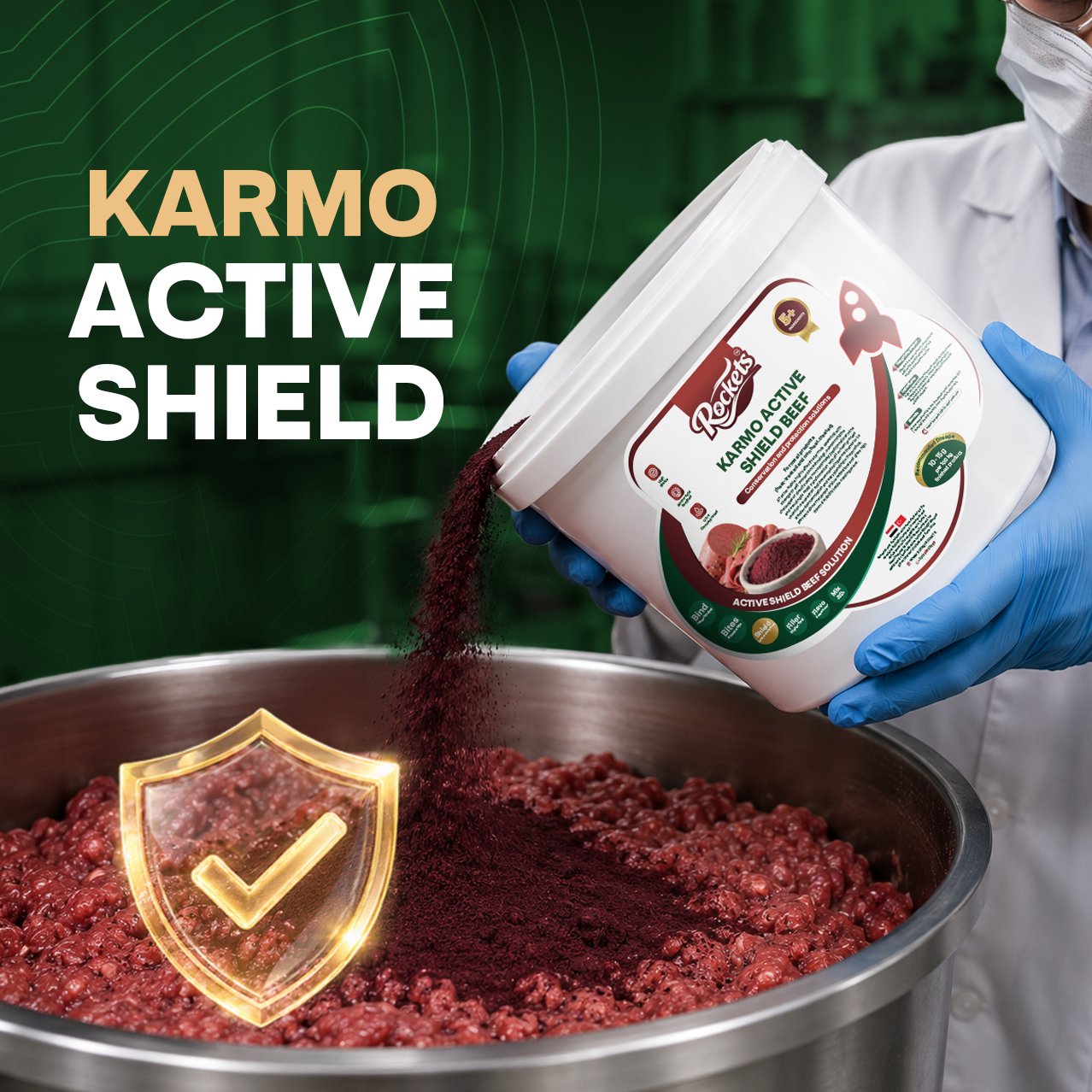 Karmo Active Shield Beef
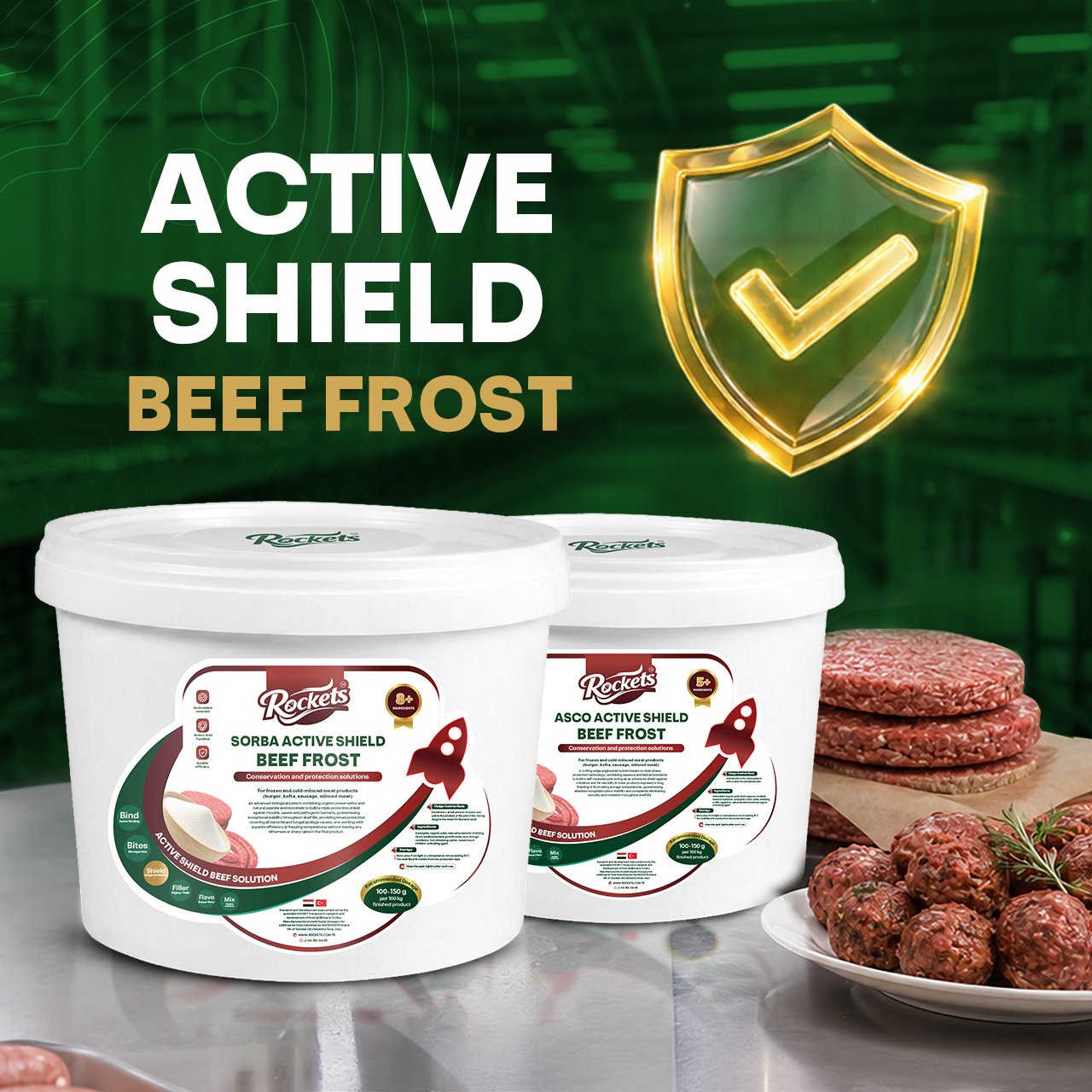 Asco Active Shield Beef
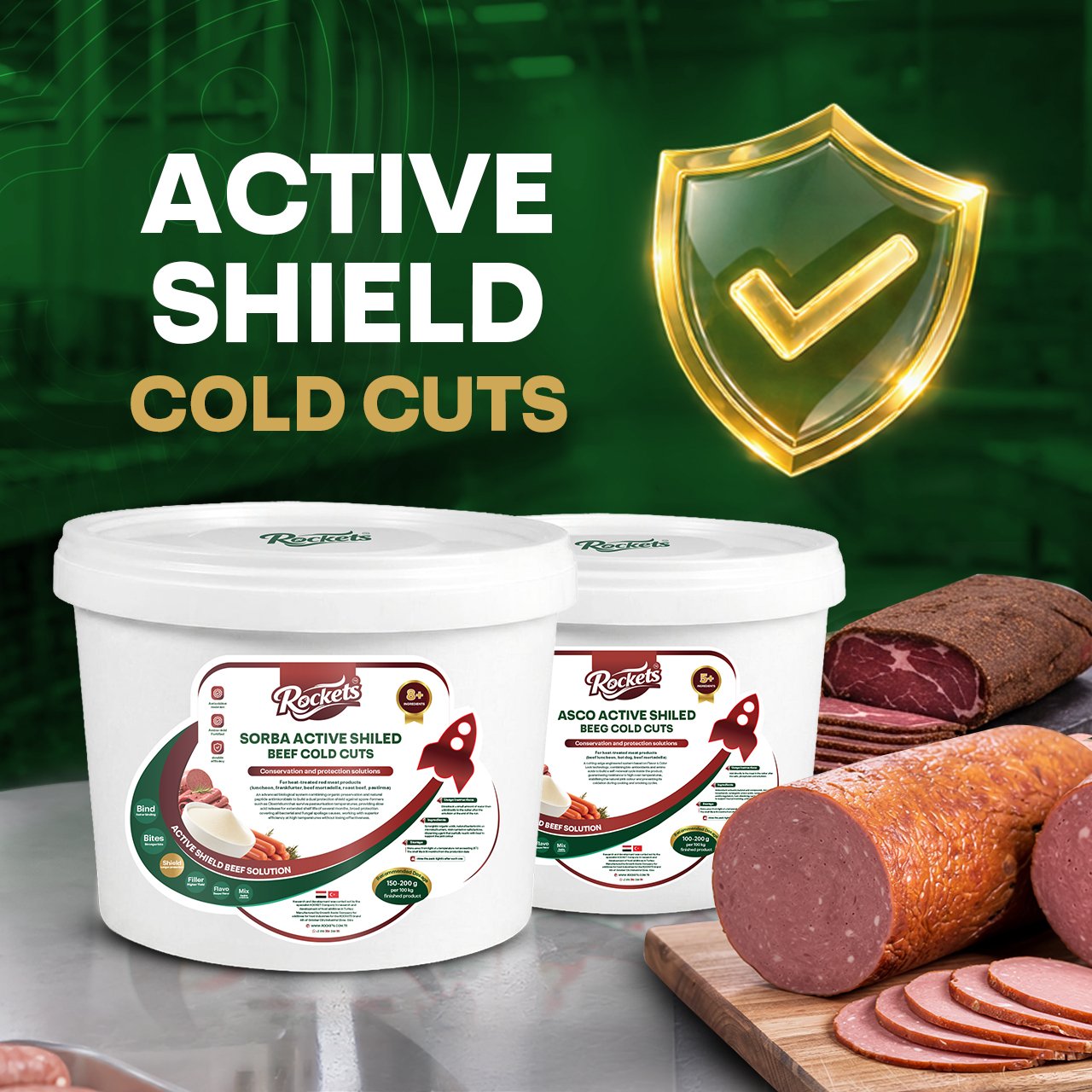 Sorba Active Shield Beef
Talk to Rockets About Your Red Meat Formulation Challenge
If your current formulation is struggling with color instability, rancidity, microbial risk, or flavor consistency in red meat products, Rockets’ technical team can help you identify which Shield system — or combination — addresses your specific production conditions.